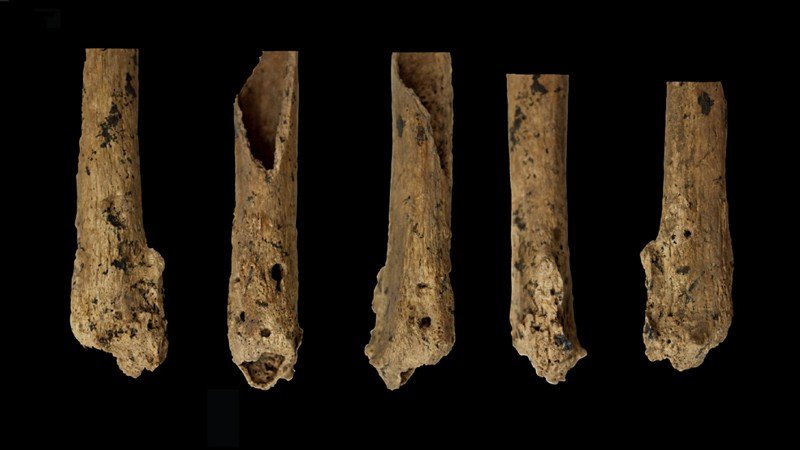
Prehistoric child’s amputation is oldest surgery of its kind
Skeleton missing lower left leg and dated to 31,000 years ago provides the earliest known evidence for surgical limb removal.

Genomics solves the mystery of a medieval mass burial
Analysis identifies the remains in an English well as those of medieval Jews, who were probably the victims of an antisemitic massacre.

Dogs cry with gladness when greeting their humans
Canines’ weeping makes them the first non-human animal known to shed happy tears.

Mount Everest’s harsh heights shelter a rich array of life
Scraps of DNA show that living things of all kinds thrive in the thin air above 4,000 metres.

How much virus does a person with COVID exhale? New research has answers
One ‘superspreader’ with Omicron shed 1,000 times as much viral RNA as those with Alpha or Delta.

Climate change is making hundreds of diseases much worse
Heatwaves, droughts, floods and storms push up the number of cases, make diseases more severe and hamper people’s ability to cope.

Scientists have unearthed what could be the world’s oldest ice core
Antarctic sample dated at 3–5 million years old extracted as international ice-drilling teams race to extend Earth’s climate record.

How much industrial carbon have we buried? Much less than thought
Analysis of 20 emissions-storage facilities suggests that they now hold 20–30% less carbon than previously estimated.

Billions more for US science: how the landmark spending plan will boost research
After two years of negotiations, the US Congress finally passed legislation to massively increase science and technology research and enhance competitiveness in the semiconductor industry.
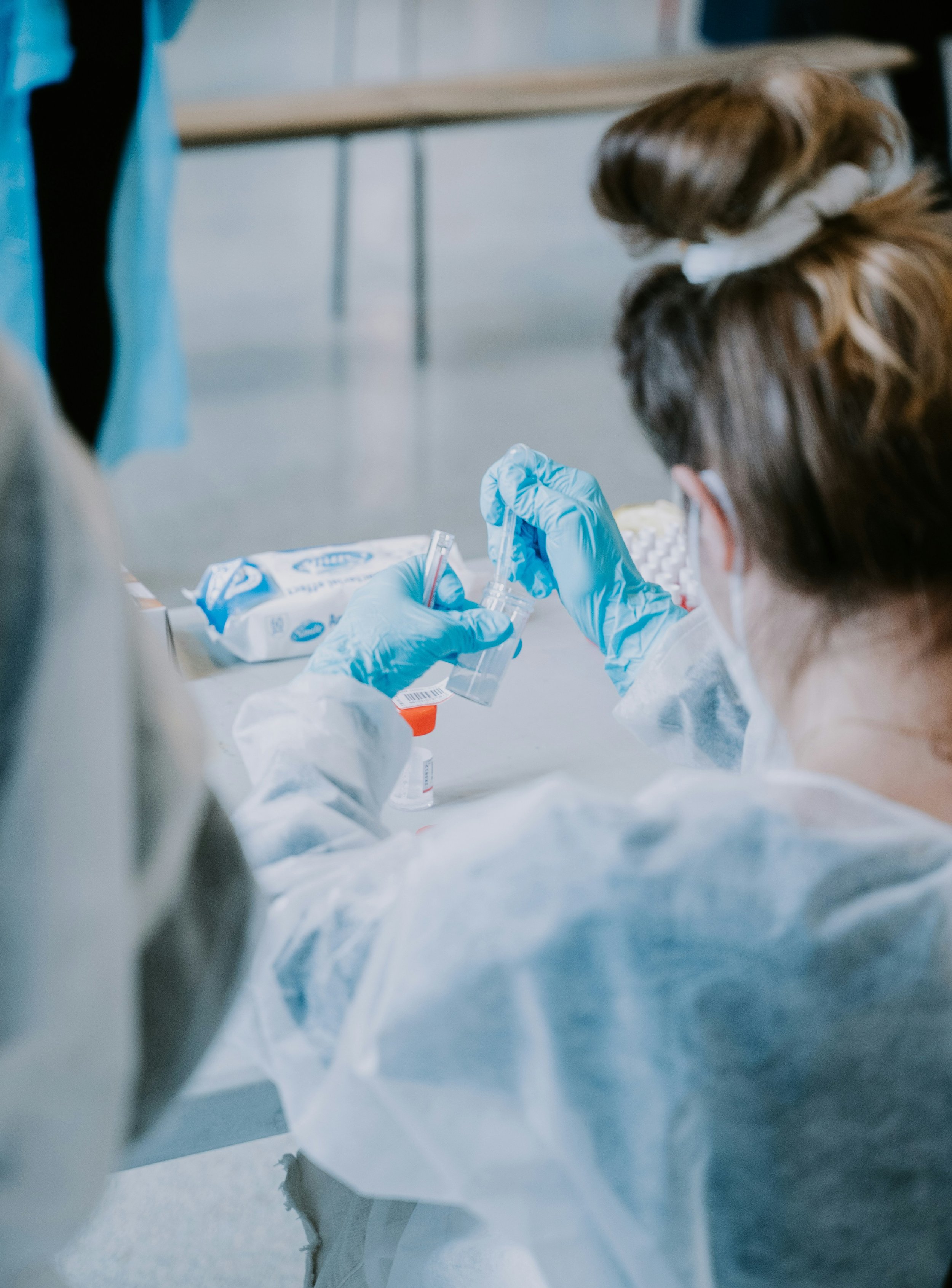
Prior Omicron infection protects against BA.4 and BA.5 variants
Catching an earlier version of SARS-CoV-2 — particularly Omicron — provides some immunity against the two fast-spreading lineages.

Why fireflies first started to glow during flight
Mature fireflies lit their lanterns before birds and bats evolved, suggesting that sexual signalling drove this dazzling behaviour.

One coronavirus infection wards off another — but only if it’s a similar variant
Infection with a pre-Omicron SARS-CoV-2 variant protects against reinfection with a second, although the effect fades almost completely after three years.

A feeding frenzy of 150 whales marks a species’ comeback
One of the largest known congregations of filter-feeding whales is recorded off the coast of Antarctica.

Energy storage in Moss Landing: A smoky challenge to a new chapter
Grid-scale batteries could be the future of green energy. But the world’s largest energy storage site has struggled to operate during its first 18 months.

A refuge within a refuge: Corals, sponges flourish in marine protected areas
Deep below the Monterey Bay’s watery surface lies a rainbow of sponges and corals. Now, researchers have discovered that these still and silent creatures benefit from a state law originally designed to protect fish.
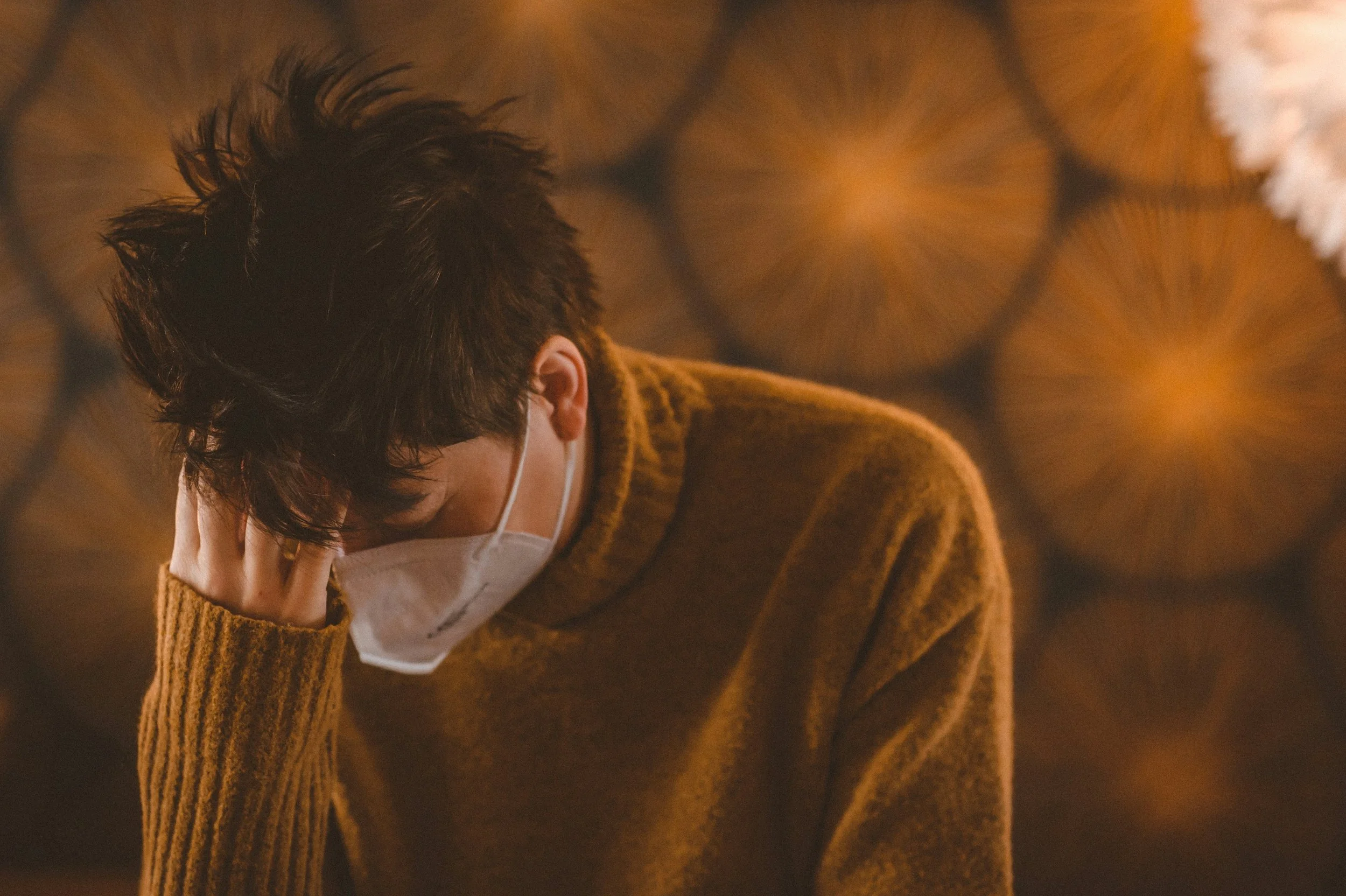
Mindsets formed at the beginning of the COVID-19 pandemic predict well-being several months later, Stanford psychologists find
Mindsets developed in the first 10 days of the COVID-19 pandemic influenced people’s emotions and health behaviors – and ultimately predicted their well-being six months later, Stanford psychologists find.
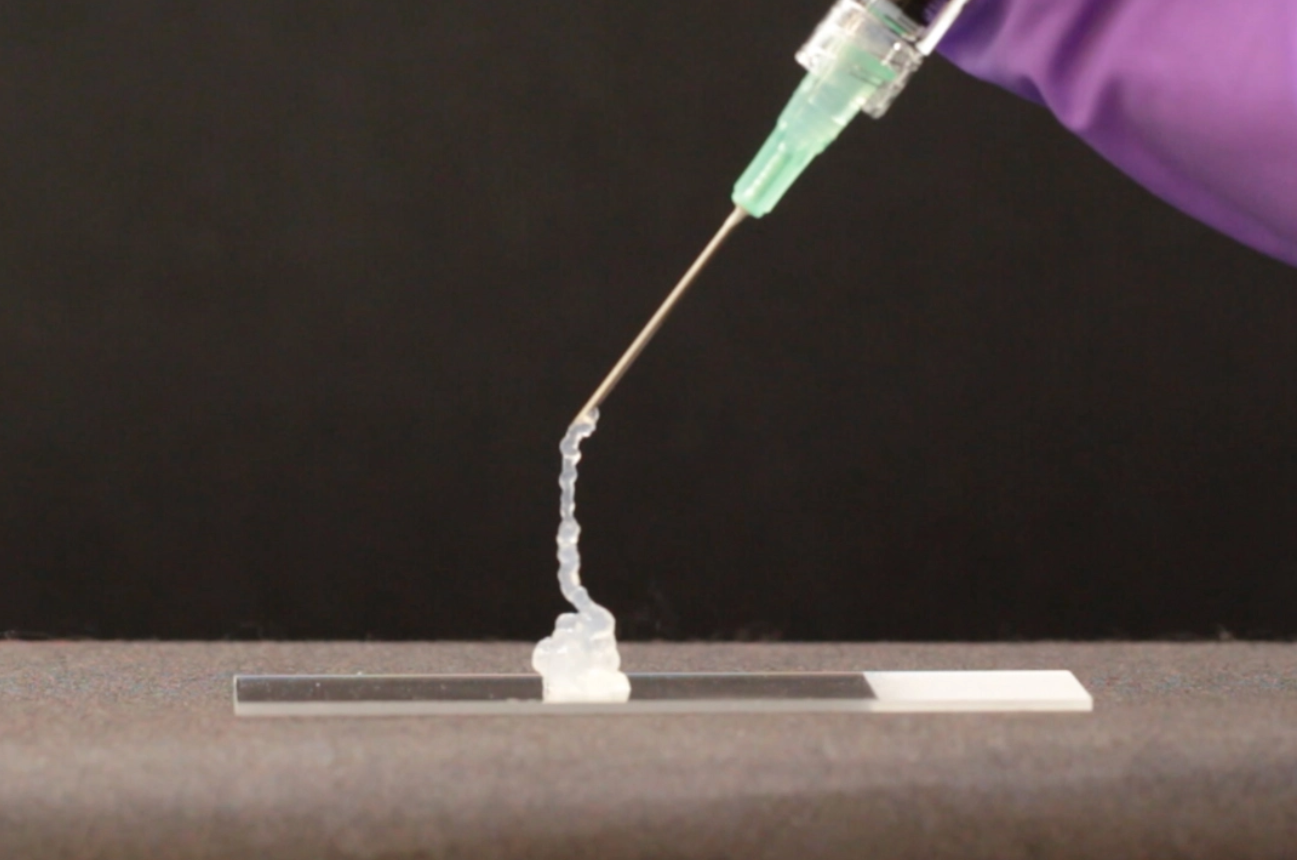
Stanford engineers develop a simple delivery method that enhances a promising cancer treatment
A gel composed of only two ingredients can provide a temporary, hospitable environment that helps activate modified immune cells to attack cancerous tumors.

Small, but mighty, Monterey astronomy institute continues making scientific advances
The Monterey Institute for Research in Astronomy is a privately-funded nonprofit astronomical observatory dedicated to research and education.